Red light therapy
Twenty minutes of light, and your skin notices first.
Red and near infrared at 630 to 850 nanometres, on a full body panel. No UV, barely any heat, and nothing touching you. You lie down and it does the work.
What is it?
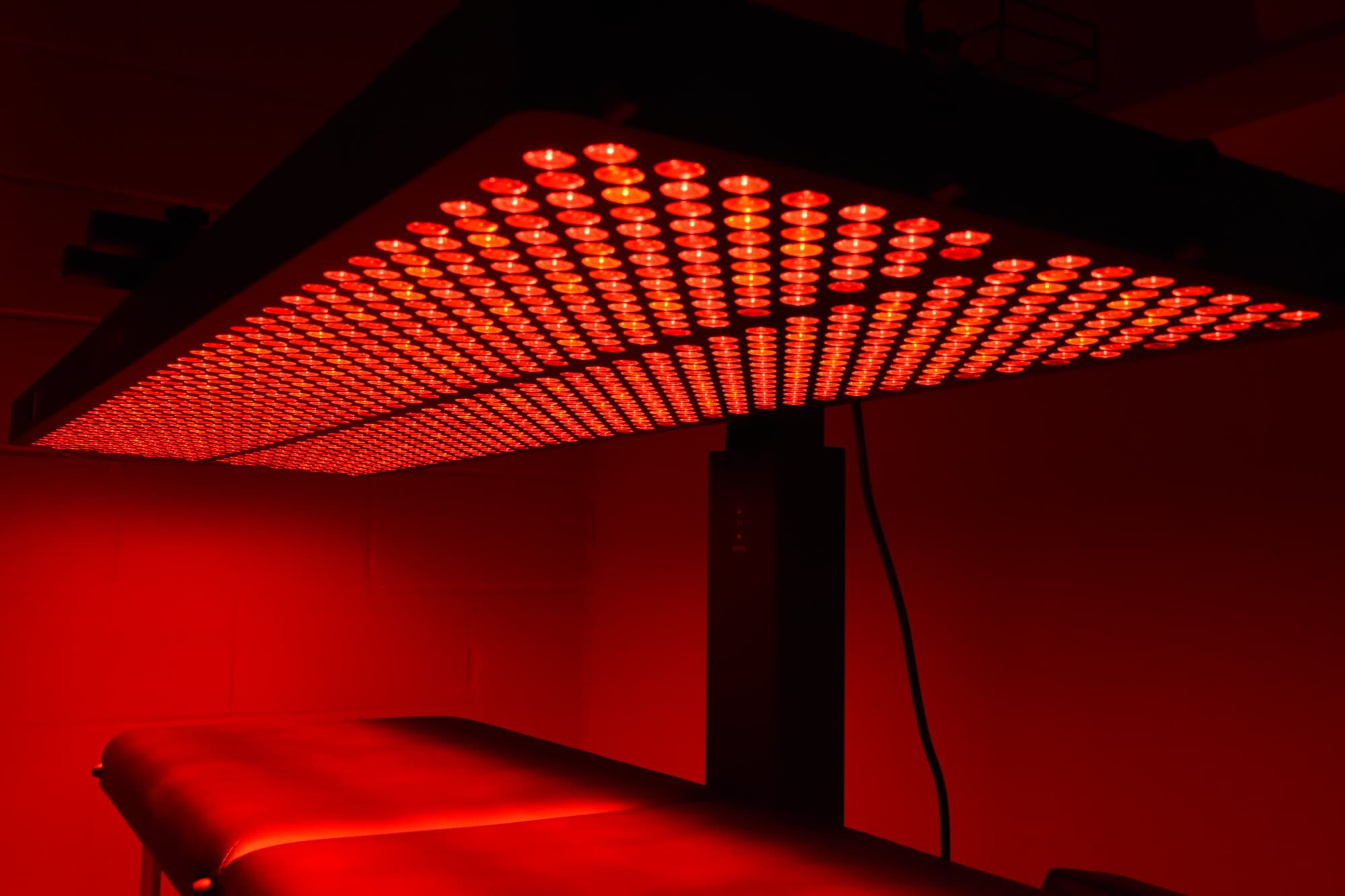
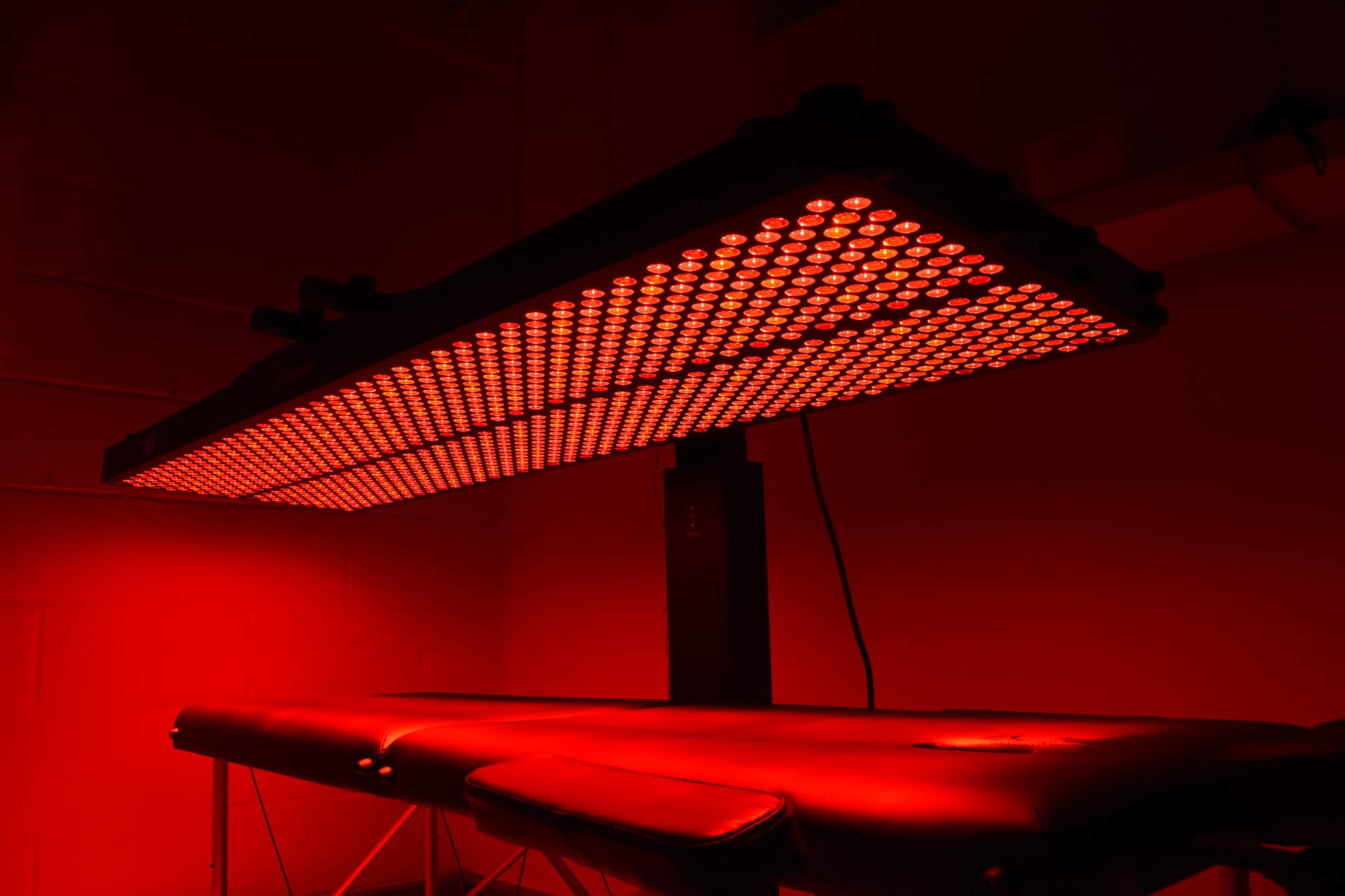
You lie on a padded bed with a large LED panel above you, wide enough to cover you head to foot. It puts out red light at around 630 nanometres and near infrared at around 850. The red stops at your skin. The near infrared goes deeper, into muscle and joint. You put the eyewear on, we set the timer, and that is the session.
- Wavelengths
- 630nm red and 850nm near infrared
- Ultraviolet
- None at all
- Equipment
- Oxydise panel and bed, CE and UKCA certified
- You wear
- Shorts and/or a vest, or swimwear
- Eyes
- Eyewear provided, worn throughout
- How long
- 10 or 20 minutes
What the session is like.
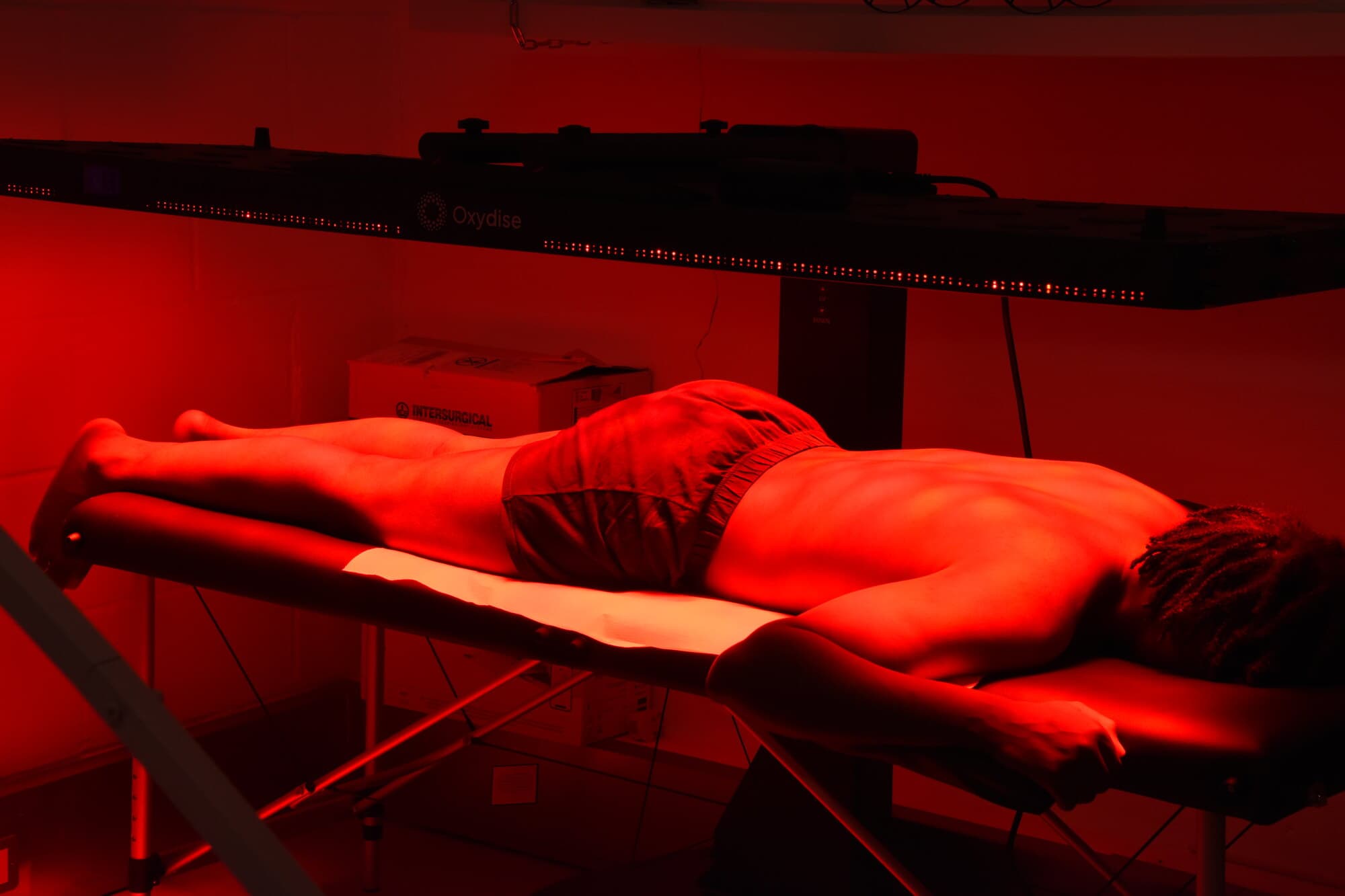
Red, warm and very quiet. The room goes the colour of the panel and the rest of the building disappears. Most people put music on. Twenty minutes goes faster than you expect it to.
Bright, not hot
There is a little warmth off the panel, about what you get from sun through a window. If it feels like more than that, say so and we raise the panel.
Light will not go through clothing
Whatever you want the light on needs to be uncovered. Shorts and a vest are plenty, swimwear works, and there is a curtain for privacy to change behind.
Someone is always here
One of us is in the studio for the whole session. You are not left alone with a machine and a timer.
What people come for.
Skin and collagen
The best evidenced thing red light does, and the reason most people book it. Texture, tone and fine lines, over a run of sessions rather than one.
Breakouts and redness
Nearly as common a reason as ageing, and people usually notice this one sooner.
Recovery after training
After a long run, a heavy session, or the day something is still sore. The near infrared half is the part that goes deep enough to matter here.
Stiff joints and aching muscle
Knees, shoulders, lower backs. Often our older clients, often alongside physio they are already having.
Sleep and winding down
Softer ground than the rest. Plenty of people tell us they sleep better on the nights they come in.
Sessions
The combined session is an hour in the hyperbaric chamber, then twenty minutes under the panel. About ninety minutes end to end, and it is the thing we are really here to do.
Red light on its own comes as a pack of ten rather than as a single session, which is also how long it takes before most people notice anything.
More on the combined session- Combined session, first visit
- £59
- Combined session, every visit after
- £75
- Express, ten sessions
- £99
- Full, ten sessions
- £199
An hour in the chamber, then twenty minutes of light
Packs bring it under £40
10 minutes each, red light on its own
20 minutes each, red light on its own
And what it is not.
It is not a sunbed. Sunbeds work by ultraviolet, which is the part of sunlight that burns skin and ages it. There is no ultraviolet in this panel at all, which is exactly why you can multiple times a week without doing yourself any harm.
You will not tan and your skin will not change colour. It is not a laser, nothing touches you, and nothing is left on your skin afterwards.
FAQs
- How many before I notice anything?
- For skin, think in runs rather than single visits. People usually start saying something around session six to ten, which is why the packs are tens. For soreness after training it is often the same evening.
- Is it safe with tattoos?
- Yes. There is no ultraviolet and no heat to speak of, so ink is not affected. If a tattoo is brand new and still healing, leave it until it has settled.
- Can I keep contact lenses in?
- Yes. You wear the eyewear over the top either way, and you should keep it on for the whole session.
- What should I bring?
- Shorts and a vest, or swimwear. Come with clean skin if you can, since make up and heavy SPF sit between you and the light.
- Should I check with my GP?
- If you are pregnant, taking anything that makes you sensitive to light, managing a skin condition, or unsure for any reason, yes. We would always rather you asked first.